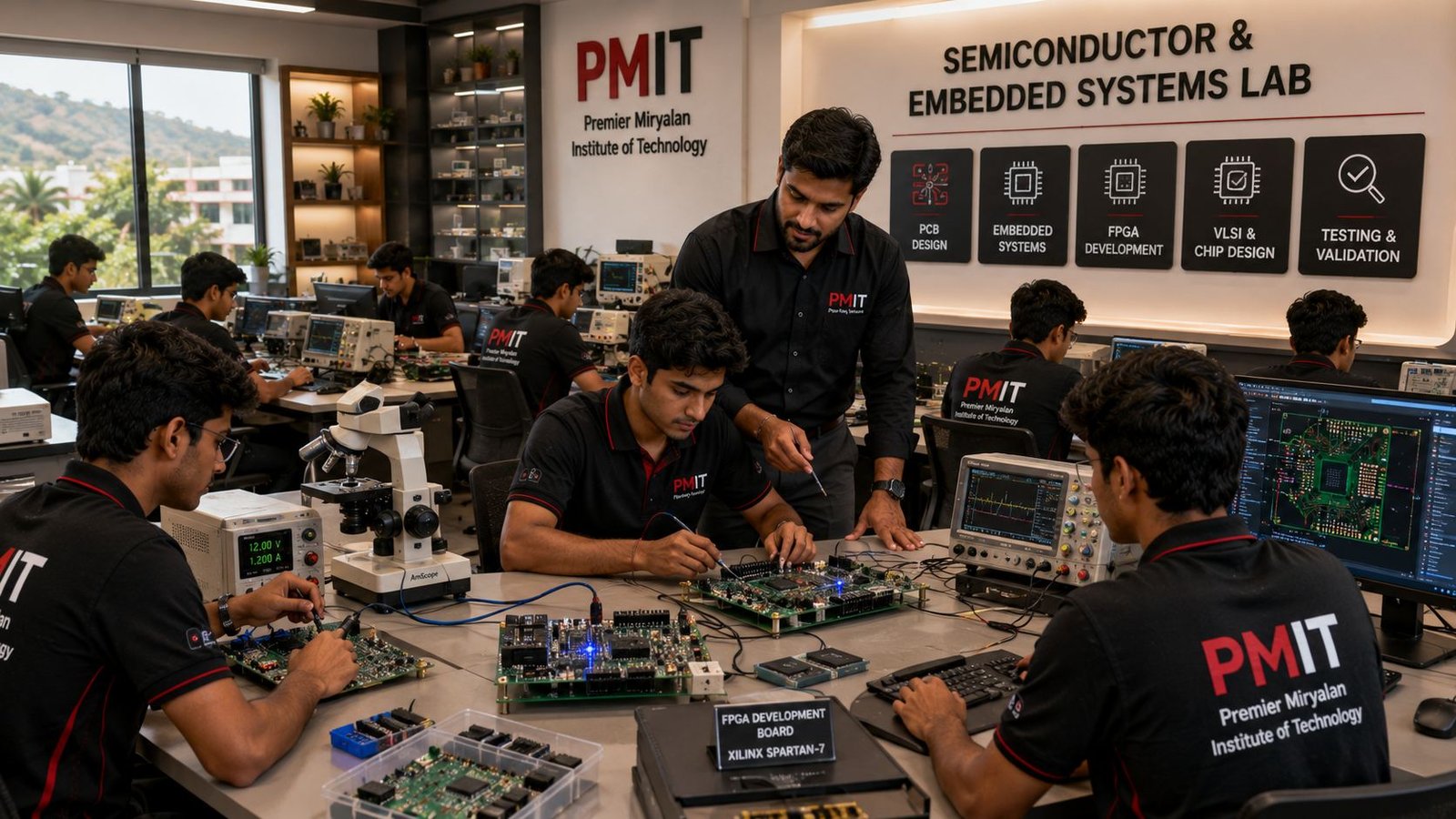
Education

Building Skills for the Industries of Tomorrow

Hands-on, project-based training that bridges the gap between academic learning and industry expectations — for school students, engineers, graduates and professionals.

Why Skill Development at PMIT?

Experiential learning, industry-standard tools

Programmes Offered

Eight tracks across future technology domains

Artificial Intelligence & Machine Learning

  • Python Programming
  • Machine Learning
  • Deep Learning
  • Computer Vision
  • NLP
  • AI Applications
  • Generative AI Fundamentals

VLSI Design

  • Digital Electronics
  • CMOS Technology
  • Verilog HDL
  • FPGA Basics
  • ASIC Design Flow
  • Physical Design
  • Verification Fundamentals

Embedded Systems & IoT

  • Microcontrollers
  • Embedded C
  • ARM Architecture
  • Sensors & Actuators
  • IoT Communication
  • Embedded Linux
  • Real-Time Applications

Drone Technology & Pilot Training

  • Drone Fundamentals
  • Flight Mechanics
  • UAV Components
  • Mission Planning
  • Drone Assembly
  • Safety & Regulations
  • Mapping & Survey
  • Agricultural Applications

CAD Engineering Design

  • AutoCAD
  • SolidWorks
  • CATIA
  • Creo
  • Product Design
  • Mechanical Components
  • Assembly Design
  • Engineering Drawings

CAE & Finite Element Analysis (FEA)

  • Structural Analysis
  • Static & Dynamic Loading
  • Stress & Strain
  • Mesh Generation
  • Design Validation

CFD — Computational Fluid Dynamics

  • Aerodynamics
  • Heat Transfer
  • Internal & External Flow
  • Thermal Analysis
  • Engineering Optimization

Robotics & Automation

  • Robot Fundamentals
  • Sensors
  • Motion Control
  • Industrial Automation
  • Robot Programming
  • Autonomous Systems
Learning Methodology

Assessed through implementation, not theory alone

  • Classroom Sessions
  • Laboratory Practice
  • Mini Projects
  • Industry Case Studies
  • Mentor Guidance
  • Technical Workshops
  • Project Reviews
  • Final Capstone Project
Industry-Relevant Projects

Build a professional portfolio

  • AI-based Image Recognition
  • Smart IoT Devices
  • FPGA Design
  • Embedded Control Systems
  • Drone-Based Survey Models
  • CAD Product Models
  • Structural Simulations
  • CFD Flow Analysis
Who Can Join?

Structured according to background and experience

Industry Internship Programme

From classroom learning to real-world implementation

Selected students may participate in internships while pursuing their training — working on live engineering projects, AI applications, embedded systems, VLSI design, CAD/CAE/CFD assignments, drone applications and research projects.
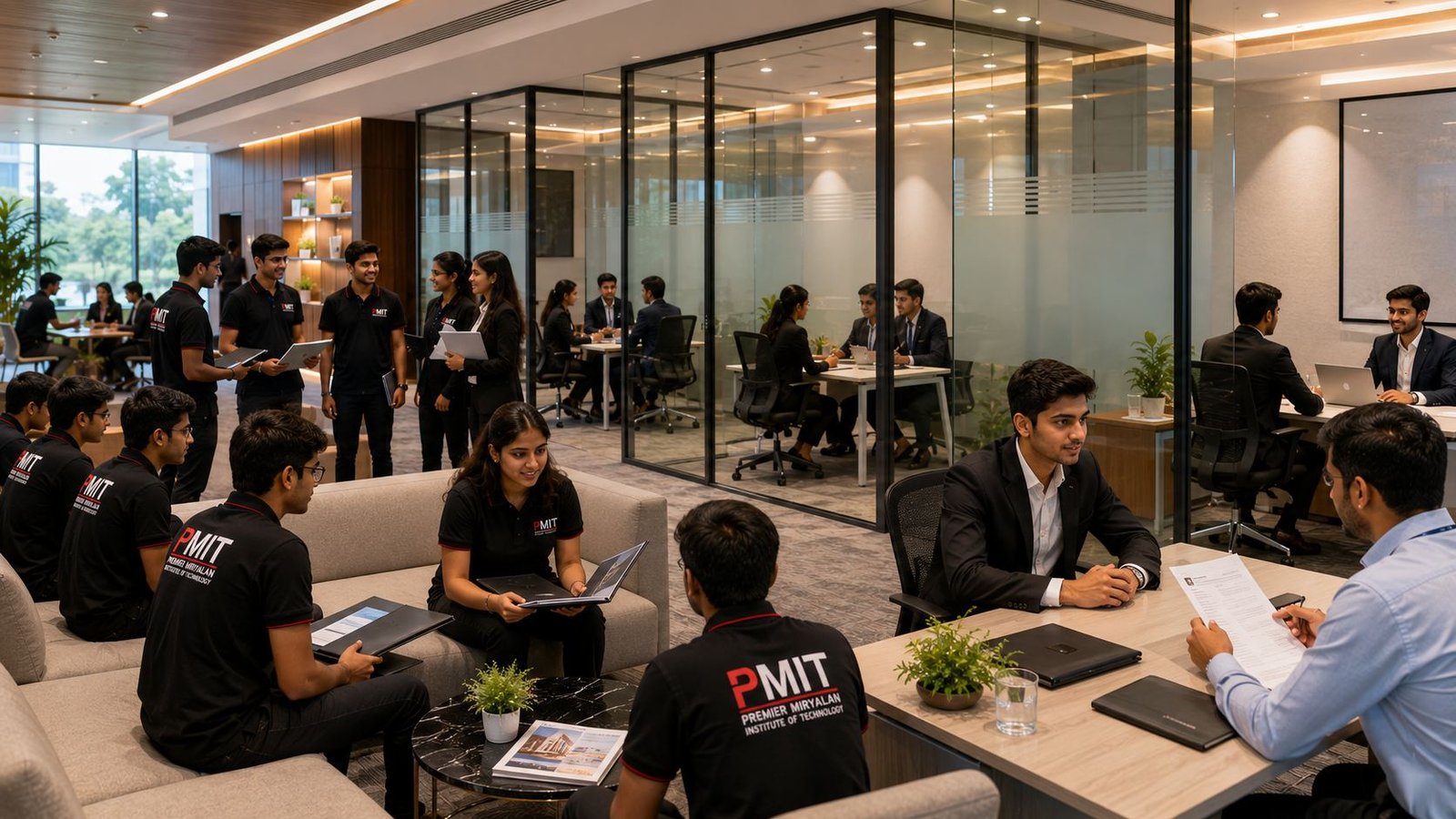
PMIT students in industry interviews and networking sessions

Post-Training Internship Support

  • Internship Preparation
  • Technical Resume Development
  • Portfolio Building
  • Technical Interview Preparation

Career Development

  • Career Counselling
  • Resume & LinkedIn Building
  • Aptitude & Interview Training
  • Group Discussion Practice

Industry Exposure

  • Industry Visits
  • Guest Lectures by Experts
  • Innovation Challenges
  • Technical Bootcamps
Career Opportunities After Training

Where PMIT skill graduates can head next

AI & Computing

  • AI Engineer
  • ML Engineer
  • Data Analyst
  • Computer Vision Engineer

Semiconductor & Electronics

  • VLSI Design Engineer
  • Embedded Systems Engineer
  • FPGA Engineer
  • Hardware Validation Engineer

Mechanical & Product Design

  • CAD Design Engineer
  • CAE / FEA Analyst
  • CFD Engineer
  • Product Development Engineer

Drone & Autonomous Systems

  • Drone Pilot
  • UAV Operations Engineer
  • Drone Survey Specialist
  • UAV Maintenance Engineer

Internship, employment and placement opportunities depend on student performance, employer requirements, market conditions and availability. PMIT does not guarantee internships or employment.

Build the Skills That Shape the Future

Transform knowledge into capability.